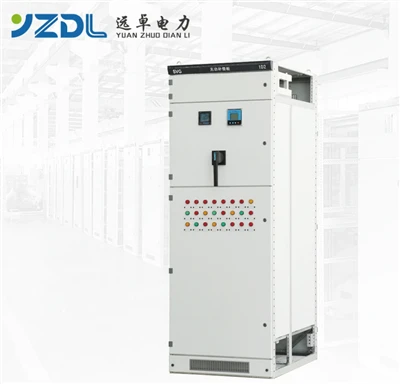
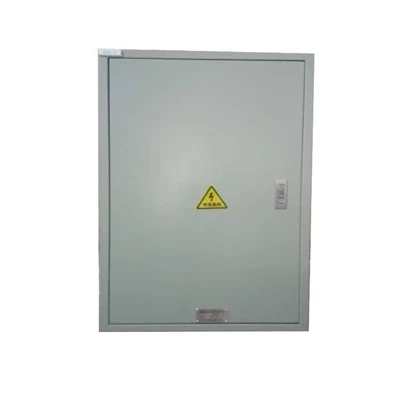
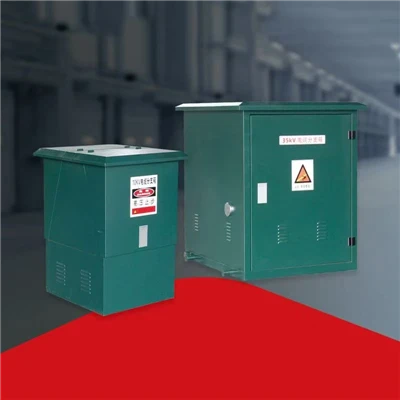
Currently, railway power distribution networks increasingly use cable power supply. Sometimes, there are situations where independent loads with small capacities are relatively concentrated. In such cases, we typically use cable branch boxes to connect multiple cable branches. This is because cable branch boxes cannot directly operate on each line; they only serve as cable branches. The main functions of cable branch boxes are twofold: first, to transfer cables; and second, to branch cables.
(1) Cable Branching Function: When a power distribution line is long, using many small-area cables for power transmission would be wasteful. Therefore, when the line goes out to the load, we usually choose a main cable for outgoing transmission. Then, near the load, we use a cable branch box to branch the main cable, dividing it into many small-area cables, which are then connected to the load.
(2) Cable Transfer Function: When the power distribution distance is long, the cable length itself cannot meet the long-distance requirements. Therefore, cable joints or cable transfer boxes must be used for connection. Normally, cable joints are used when the power distribution distance is less than 3000m. However, on cable lines with a distance exceeding 3000m, using many joints would increase safety hazards. Therefore, to ensure power supply safety, cable branch boxes are typically used for connection.
(3) Cable branch boxes facilitate the connection of cables with different cross-sections, eliminating the complex process of cable joints, improving the cable connection environment, ensuring connection quality, and facilitating routine inspection and maintenance during subsequent operation.