The tokenization process plays a crucial and multi - faceted role in a Transformer, which has significant implications for various applications in the field of natural language processing and beyond. As a Transformer supplier, understanding these roles is essential for both product development and meeting the needs of our clients.

1. Breaking Down Language into Manageable Units
At its core, tokenization is the process of splitting text into smaller units called tokens. These tokens can be words, sub - words, or even characters. For a Transformer, this step is fundamental because it allows the model to process text in a more structured and efficient way.
In natural language, sentences are long and complex. A Transformer cannot directly handle the entire text as a single entity. By tokenizing the text, we convert it into a sequence of tokens that the model can easily digest. For example, consider the sentence "The quick brown fox jumps over the lazy dog." Tokenization might split this sentence into individual words: ["The", "quick", "brown", "fox", "jumps", "over", "the", "lazy", "dog"].
This breakdown into tokens simplifies the input for the Transformer. The model can then analyze each token's relationship with others in the sequence, which is crucial for tasks such as language translation, text summarization, and sentiment analysis.
2. Enabling Embedding Representation
Once the text is tokenized, each token needs to be represented in a numerical format that the Transformer can understand. This is where token embeddings come into play. Token embeddings are vectors that capture the semantic and syntactic information of each token.
The Transformer uses these embeddings to perform its operations. For instance, similar tokens will have similar vector representations in the embedding space. This property allows the model to understand the relationships between different words. For example, the words "car" and "automobile" will have similar embeddings, indicating their semantic similarity.
As a Transformer supplier, we ensure that our models are equipped with effective token embedding mechanisms. This enables our clients to get more accurate results in their applications. For example, in a language translation task, the embedding representation helps the model to find the most appropriate translations based on the semantic similarity of tokens in different languages.
3. Handling Out - of - Vocabulary (OOV) Tokens
One of the challenges in tokenization is dealing with words that are not in the model's vocabulary. These are known as out - of - vocabulary (OOV) tokens. Tokenization techniques such as sub - word tokenization can help address this issue.
Sub - word tokenization splits words into smaller sub - units. For example, the word "unhappiness" might be tokenized into ["un", "happy", "ness"]. This approach allows the model to handle OOV words by representing them as a combination of known sub - words.
As a supplier, we incorporate advanced sub - word tokenization algorithms in our Transformer models. This ensures that our clients can process texts with a wide range of vocabulary, even when the text contains rare or new words.
4. Improving Model Efficiency
Tokenization also plays a role in improving the efficiency of the Transformer. By reducing the input text into a sequence of tokens, the model can process the data more quickly. Additionally, tokenization can help in reducing the computational complexity of the model.
For example, if we were to process a long text without tokenization, the model would have to analyze the entire text as a single unit, which could be very time - consuming. Tokenization breaks the text into smaller parts, allowing the model to process each part independently and then combine the results.
This efficiency is crucial for real - time applications such as chatbots and voice assistants. As a Transformer supplier, we optimize our tokenization processes to ensure that our models can deliver fast and accurate results.
5. Customization for Specific Applications
Different applications may require different tokenization strategies. For example, in a sentiment analysis task, we might want to tokenize text in a way that captures the emotional content of the words. In a legal document analysis, we might need to tokenize text to identify legal terms and concepts.
As a Transformer supplier, we offer customization options for tokenization. We work closely with our clients to understand their specific requirements and develop tokenization strategies that are tailored to their applications. This allows our clients to get the most out of our Transformer models.
6. Impact on Model Training
Tokenization also has a significant impact on the training process of the Transformer. During training, the model learns the relationships between tokens based on the input data. The quality of tokenization can affect how well the model learns these relationships.
For example, if the tokenization is too coarse, the model may miss important semantic information. On the other hand, if the tokenization is too fine - grained, the model may overfit the training data. As a supplier, we carefully design our tokenization algorithms to strike the right balance and ensure effective model training.
Applications and Use Cases
The role of tokenization in a Transformer is evident in various applications. In natural language generation, tokenization helps in generating coherent and meaningful text. For example, in a news article generation task, the model uses tokenized text to generate new sentences based on the learned patterns.
In information retrieval, tokenization is used to index and search for relevant documents. By tokenizing the documents and the query, the model can quickly find the most relevant information.
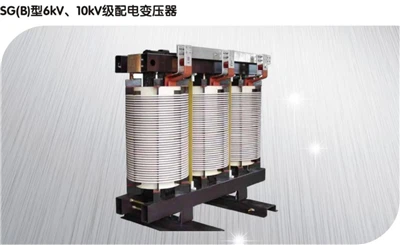
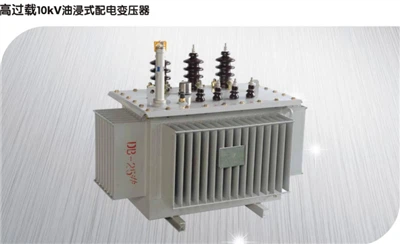
We offer a range of Transformer products that are suitable for different applications. For instance, our Immersed Transformer is designed for high - performance tasks, while our Dry Type Pad Mounted Transformer is more suitable for applications where space and safety are important considerations.
Conclusion
In conclusion, the tokenization process is a critical component of a Transformer. It enables the model to process text effectively, represent tokens in a numerical format, handle OOV tokens, improve efficiency, and customize for specific applications. As a Transformer supplier, we understand the importance of tokenization and strive to provide high - quality products that leverage the power of tokenization.
If you are interested in our Transformer products and would like to discuss your specific requirements, we invite you to contact us for a procurement discussion. We are committed to providing you with the best solutions for your natural language processing needs.
References
- Vaswani, A., Shazeer, N., Parmar, N., Uszkoreit, J., Jones, L., Gomez, A. N., ... & Polosukhin, I. (2017). Attention is all you need. Advances in neural information processing systems.
- Devlin, J., Chang, M. W., Lee, K., & Toutanova, K. (2018). BERT: Pre - training of deep bidirectional transformers for language understanding. arXiv preprint arXiv:1810.04805.
- Sennrich, R., Haddow, B., & Birch, A. (2015). Neural machine translation of rare words with sub - word units. arXiv preprint arXiv:1508.07909.