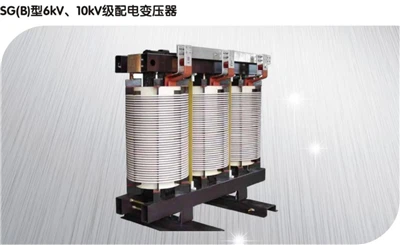
Hey there, tech enthusiasts and industry insiders! Today, I'm going to dive deep into the world of Transformer models and talk about the differences between autoregressive and non-autoregressive Transformer models. As a Transformer supplier, I've seen firsthand how these models are shaping the future of AI and machine learning. So, let's get started!
Autoregressive Transformer Models
Autoregressive Transformer models are some of the most well - known models in the AI space. You might have heard of giants like GPT (Generative Pretrained Transformer) which fall into this category. The core idea behind autoregressive models is that they generate output one token at a time, based on the previously generated tokens.
Think of it like telling a story one word at a time. Each new word depends on all the words that came before it. In a mathematical sense, if we have a sequence of tokens (y_1,y_2,\cdots,y_n), an autoregressive model predicts (y_i) conditioned on (y_1,y_2,\cdots,y_{i - 1}). So, (P(y_1,y_2,\cdots,y_n)=\prod_{i = 1}^{n}P(y_i|y_1,y_2,\cdots,y_{i-1})).
One of the big advantages of autoregressive models is their ability to generate very coherent and context - rich sequences. Since each token is generated based on the full history of previous tokens, the output tends to flow well and make sense in the given context. For example, in language generation tasks, the text produced by autoregressive models often reads as if it was written by a human.
However, there are also some drawbacks. The sequential nature of output generation means that autoregressive models can be quite slow, especially when dealing with long sequences. Each new token has to wait for the previous ones to be generated, creating a bottleneck in the generation process.
If you're interested in autoregressive - based solutions for specific applications, you can check out the Immersed Transformer which offers reliable performance in a range of contexts.
Non - Autoregressive Transformer Models
On the other hand, non - autoregressive Transformer models take a different approach. Instead of generating tokens one by one, they try to generate the entire output sequence in parallel. This is like writing an entire story all at once rather than word by word.
Non - autoregressive models directly predict all tokens in the output sequence based on the input. For instance, in a machine translation task, instead of translating the sentence word by word in a sequential manner, a non - autoregressive model will analyze the whole input sentence and then output the translated sentence all at once.
The main advantage of non - autoregressive models is their speed. Since they generate the entire sequence in parallel, they can be much faster than autoregressive models, especially for long sequences. This makes them a great choice for applications where real - time or high - speed generation is required, such as live captioning.
But non - autoregressive models also face some challenges. Generating coherent sequences can be more difficult because they don't have the benefit of building the output token by token, considering the context at each step. Sometimes the output might lack the smoothness and context - awareness that autoregressive models can achieve.
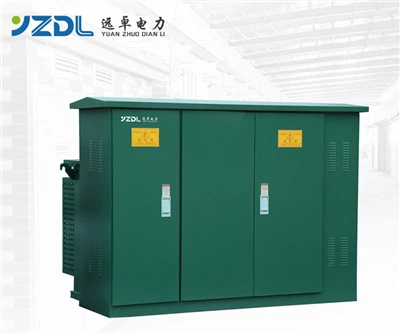
For high - speed and efficient non - autoregressive solutions, the Dry Type Pad Mounted Transformer is a great option for various industrial needs.
Key Differences in Training and Inference
When it comes to training, autoregressive models are trained to maximize the likelihood of the next token given the previous tokens. The loss function is typically cross - entropy loss computed over all the tokens in the sequence. This training process effectively teaches the model to predict the most likely next token at each step.
Non - autoregressive models, however, are often trained to minimize a different kind of loss, such as the edit distance or the mean squared error between the predicted sequence and the target sequence. The goal is to get the entire predicted sequence as close as possible to the correct sequence in one shot.
In terms of inference, as we've already discussed, autoregressive models have a sequential inference process. They start from the beginning of the output sequence and generate each token one after another. This can be a time - consuming process, especially for long outputs.
Non - autoregressive models, in contrast, perform inference in a single pass. They take the input, process it, and directly produce the entire output sequence. This results in much faster inference times, as long as the model can generate coherent results.
Performance in Different Tasks
In language generation tasks like text summarization and story writing, autoregressive models usually perform better in terms of the quality of the generated text. Their sequential generation process allows them to build up context and generate text that is more natural and flowing. For example, when generating a news article summary, an autoregressive model can create a summary that reads like a well - written piece of text.
Non - autoregressive models, on the other hand, are more suitable for tasks where speed is crucial. In machine translation, especially for translating long documents, non - autoregressive models can provide quick translations. Although the translations might not be as polished as those from autoregressive models, they can still be accurate enough for many practical purposes.
In speech recognition, autoregressive models can adjust their predictions as they "hear" more of the speech signal. This is because they are generating the transcription one word at a time and can take into account previous words. Non - autoregressive models can quickly transcribe the speech but might struggle in cases where context is very important.
Which One to Choose?
The choice between autoregressive and non - autoregressive Transformer models really depends on your specific needs. If you prioritize the quality of the generated output and the sequence needs to be very coherent and context - rich, then an autoregressive model is probably the way to go. However, if speed is your main concern and you can tolerate some compromises in output quality, a non - autoregressive model might be a better fit.
As a Transformer supplier, we offer a wide range of solutions based on both autoregressive and non - autoregressive models. Whether you're working on a research project, a commercial application, or an industrial task, we can help you find the right Transformer that suits your requirements.
If you're interested in discussing your specific needs and exploring the best Transformer models for your project, don't hesitate to reach out. We're here to assist you with all your Transformer - related queries and help you make the most informed decision. Let's chat about how we can drive your project forward with the latest and greatest in Transformer technology!
References
- Vaswani, A., Shazeer, N., Parmar, N., Uszkoreit, J., Jones, L., Gomez, A. N., ... & Polosukhin, I. (2017). Attention is all you need. Advances in neural information processing systems.
- Gu, J., Bradbury, J., Xiong, C., & Socher, R. (2018). Non - autoregressive neural machine translation. arXiv preprint arXiv:1711.02281.
- Radford, A., Narasimhan, K., Salimans, T., & Sutskever, I. (2018). Improving language understanding by generative pre - training.